
Why Investing in Long Island City Real Estate is a Smart Move in 2026
Long Island City has shifted from an industrial edge of Queens to a prime investment corridor minutes from Midtown. According to Realtor.com, average market time for properties in Long Island City has hovered near 45 days as of late 2024, signaling strong absorption. That pace, combined with rapid residential and commercial development around Court Square, Queens Plaza, and Hunters Point, positions investing in Long Island City real estate as a data-backed strategy heading into 2026 rather than a speculative bet.
What Core Fundamentals Support Investing in Long Island City Real Estate in 2026?
Long Island City’s proximity to Midtown Manhattan remains one of its strongest fundamentals. The E, M, and 7 trains from Court Square reach Grand Central and Midtown offices in roughly 8 to 12 minutes, based on schedules summarized by the MTA. That commute advantage, paired with East River ferry service from Gantry Plaza State Park and Hunters Point South, keeps demand from commuters and hybrid workers resilient. For investors focused on long-term occupancy, such consistent transit access reduces vacancy risk and supports premium pricing across condos and rentals.
Job growth surrounding Long Island City adds another structural pillar. According to the NYC Economic Development Corporation, the broader area has seen thousands of office and industrial jobs added over the past decade, with creative, tech, and film production sectors expanding in former warehouse spaces. Studios near Jackson Avenue, back-office campuses around Queensboro Plaza, and commercial buildings along Northern Boulevard all contribute to daytime population density, which in turn supports restaurant, retail, and service tenants at street level.
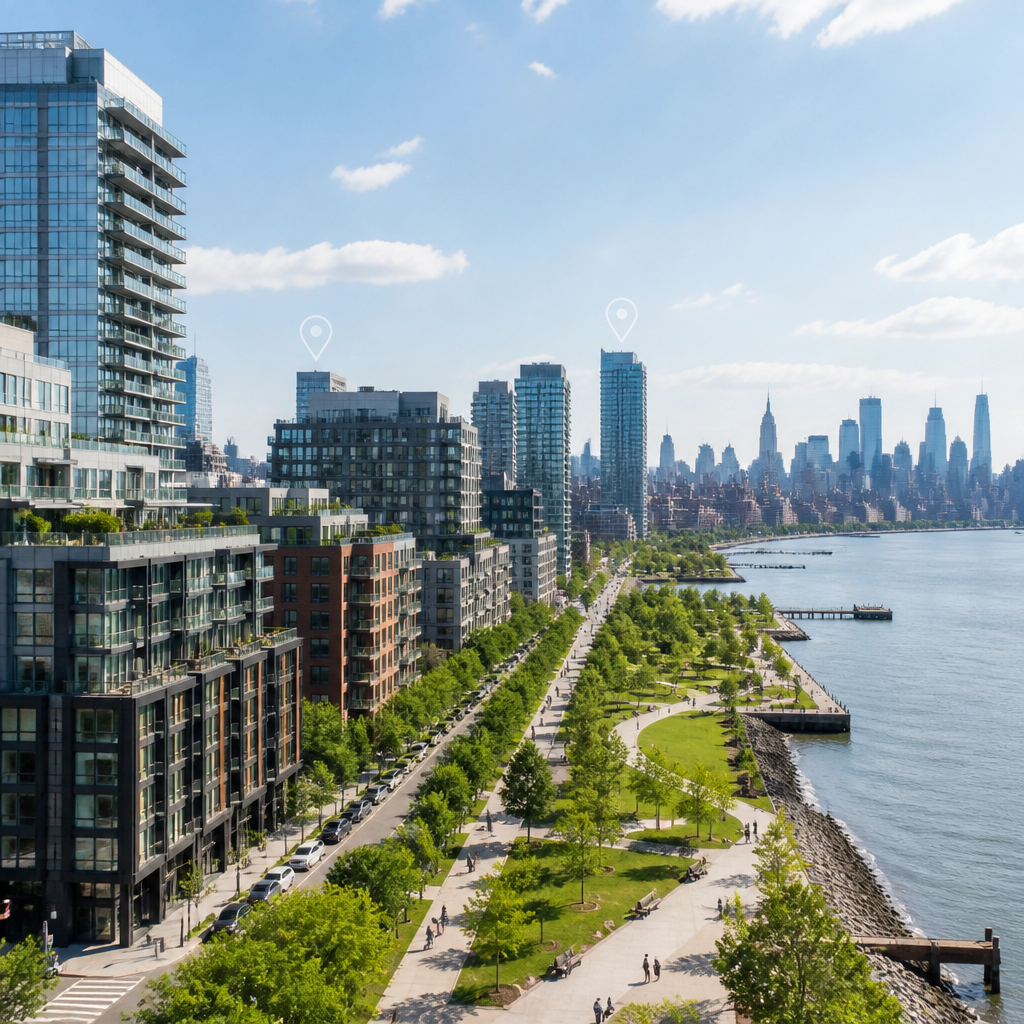
Quality-of-life amenities have also matured rapidly. Gantry Plaza State Park, Murray Park, Queensbridge Park, and the waterfront esplanade near Center Boulevard create a network of green spaces that rival riverfront areas across the East River. According to Walk Score, portions of Long Island City reach walkability scores in the high 90s, qualifying as “Walker’s Paradise” zones. Such metrics matter to tenants seeking car-light lifestyles, supporting sustained interest in smaller, well-designed apartments close to Vernon Boulevard and the Court Square district.
Cultural anchors reinforce this foundation. MoMA PS1, the contemporary art institution on Jackson Avenue, draws international visitors and keeps Long Island City visible in media coverage. Nearby, LaGuardia Community College on Thomson Avenue adds thousands of students and staff to the daily foot traffic. According to StreetEasy, inventory in Long Island City often remains constrained, with active listings significantly below many outer-borough neighborhoods, which can support price resilience during broader market slowdowns.
How Do Pricing and Rental Yields Shape Investment Returns in Long Island City?
Pricing in Long Island City historically reflects its position as a gateway to Manhattan, though entry remains below premier Manhattan districts. According to Zillow, typical condo values in Long Island City as of early 2025 often range between $850,000 and $1,300,000, depending on building age, amenity level, and river views. Newer towers along Center Boulevard and 5th Street command premiums over older walk-ups in Dutch Kills or around 21st Street, yet still undercut many Midtown East and Upper East Side price points on a per-square-foot basis.
Rental yields remain central for investors prioritizing cash flow. Based on surveys by StreetEasy, one-bedroom apartments in popular buildings near Vernon Boulevard frequently achieve monthly rents in the $3,500 to $4,500 range as of late 2024, while two-bedrooms can reach between $5,000 and $6,500. When paired with 20% to 30% equity contributions and conventional financing, many stabilized units can produce cap rates in the mid-3% to mid-4% range, depending on taxes and common charges.
Evening walks along Center Boulevard near Hunters Point South Park carry a distinct sensory texture that influences tenant retention. The glow of the Pepsi-Cola sign reflects off the East River, streetlights shimmer on the promenade, and the low hum of ferries mixes with conversations from patios at restaurants along 50th Avenue. The aroma of grilled food from riverside spots and the cool breeze rolling off the water create an atmosphere that encourages longer leases in nearby buildings like those lining 2nd Street.
Condominium investors evaluating resale potential benefit from understanding buyer demographics. According to Realtor.com, listings with in-unit laundry, outdoor space, and proximity within 0.3 miles to subway stations such as Queensboro Plaza or Court Square often sell at premiums of several percentage points over comparable but less connected properties. Studios and one-bedrooms near major employers and education centers, including LaGuardia Community College and the growing life-sciences corridor along Northern Boulevard, can offer faster turnover and broader tenant pools.
What Infrastructure and Transit Projects Are Transforming Long Island City?
Transit connectivity in Long Island City extends beyond the core subway lines. The NYC Ferry’s East River route from Hunters Point South to Wall Street Pier 11 typically takes around 32 minutes, based on schedules from NYC Ferry. That alternative becomes particularly valuable during subway disruptions and appeals to residents who prioritize scenic commutes. The combination of ferries, multiple subway lines, and bike lanes along Vernon Boulevard and Jackson Avenue supports diverse commuting choices that help reduce dependency on any single transport link.
Recent and ongoing streetscape improvements have strengthened Long Island City’s investment profile. According to NYC DOT, redesigns along Queens Plaza and Jackson Avenue have added pedestrian plazas, protected bike infrastructure, and safer crossings. These upgrades, implemented over multiple project phases since the early 2010s, help convert formerly auto-dominated corridors into more functional mixed-use streets. Safer, more pleasant sidewalks often support higher ground-floor retail rents and increase the desirability of upper-floor residential units along the same stretches.
Infrastructure behind the scenes also matters. The modernization of sewer, water, and electrical systems through city-led capital projects reduces some long-term risk for dense residential construction. According to the NYCEDC Long Island City Infrastructure overview, tens of millions of dollars have been allocated over recent years to street reconstruction, waterfront resiliency measures, and open-space improvements. Those investments signal official commitment to maintaining Long Island City as a growth corridor, which can support lender confidence and sustained developer interest.
Education and civic infrastructure round out the picture. The expansion of schools such as P.S./I.S. 78 on Center Boulevard and new DOE facilities near 50th Avenue respond to increasing family demand. GreatSchools ratings for P.S./I.S. 78, listed between 7 and 9 out of 10 depending on grade band and year, according to GreatSchools, attract households seeking walkable access to education. Stable enrollment and improving facilities often correlate with stronger resale values for nearby condo and co-op buildings.
Which Micro-Neighborhoods in Long Island City Offer Distinct Investment Angles?
Hunters Point, stretching along Center Boulevard, 5th Street, and 50th Avenue, favors investors targeting high-end renters and buyers drawn to river views. Buildings near Gantry Plaza State Park and Hunters Point South Park attract residents who prioritize waterfront access and skyline vistas. According to StreetEasy, listing prices for units with unobstructed Manhattan views can exceed comparable interior-facing units by 10% to 20%, reflecting the premium placed on sunsets over the East River and direct sightlines to the Empire State Building and Chrysler Building.
Dutch Kills, just north of Queens Plaza around 39th Avenue and Crescent Street, presents a more industrial ambiance that is gradually softening. The clang of construction equipment blends with the hiss of espresso machines from emerging cafes on 29th Street, while the warm smell of pizza from local shops near 36th Avenue drifts through narrower side streets. Converted loft buildings and boutique hotels mix with small warehouses, giving the area a textured, transitional feel that appeals to creative tenants seeking spaces outside traditional luxury towers.
Court Square functions as the transit and office hub of Long Island City. Towers rising near Jackson Avenue, 44th Drive, and Crescent Street host both residential and commercial tenants. With multiple subway lines intersecting under and around the Court Square complex, tenants enjoy abundant transportation options. According to Walk Score, the Court Square area achieves transit scores in the 90s, qualifying as “Rider’s Paradise.” For investors, this translates into resilient interest from commuters even during cyclical market slowdowns.
Queensbridge, located near Queensbridge Park and the Queensboro Bridge, offers another distinct context. The Queensbridge Houses, one of the largest public housing complexes in North America, anchor the neighborhood and provide a stable residential base. Newer market-rate projects along Vernon Boulevard and 21st Street tap into demand for more affordable alternatives to Hunters Point and Court Square. Retailers and restaurants around 41st Avenue, including spots serving diverse cuisines, benefit from foot traffic between the F train at Queensbridge and the waterfront parks.
How Can Investors Strategically Enter the Long Island City Market in 2026?
Strategic entry into the Long Island City market begins with understanding building-level dynamics. New developments along 44th Drive, 5th Street, and Jackson Avenue often offer tax abatements structured over 10 to 15 years, which can materially improve early cash flow. According to policy summaries from NYC HPD, legacy 421-a and successor programs have historically reduced annual property tax burdens by thousands of dollars per unit in qualifying projects, although exact benefits vary by building and year of completion.
Financing approaches play a crucial role. Conventional loans for condos typically permit down payments starting at 10% to 20%, while many investment-focused lenders prefer 25% equity or more to secure favorable interest rates. Based on guides from Investopedia, investors often target debt-service-coverage ratios of at least 1.20 to 1.25 on rental properties to maintain resilience against short-term vacancy or rate shifts. In a submarket like Long Island City, where rents and prices both sit at elevated levels, such discipline helps manage risk.
Holding period planning remains equally important. According to trend analyses by Zillow Research, many urban neighborhoods subject to intense development cycles experience multi-year plateaus between bursts of appreciation. A five- to seven-year horizon for Long Island City assets can better align with project pipelines along Northern Boulevard, Queens Plaza, and the Anable Basin waterfront. During that period, incremental amenity openings, such as new schools, parks, and retail clusters, may gradually support both rent growth and resale pricing for strategically located properties.
Risk management involves asset diversification within the neighborhood. Some investors blend a newer high-rise condo near Center Boulevard with a smaller co-op or townhouse-style unit near 21st Street or in Dutch Kills, balancing premium appreciation potential with relatively lower entry prices. Exposure across different school zones, such as those feeding P.S./I.S. 78 and other local campuses, allows participation in varied demand drivers. Combining transit-proximate assets near Court Square with quieter residential blocks around Hunters Point South can help smooth performance through market cycles.
The 45-day average market time noted at the start of this guide reflects a pace where hesitation can quickly translate into lost opportunities in Long Island City’s constrained inventory environment. That same 45-day figure from the opening underscores the importance of aligning pricing expectations with documented demand rather than relying on speculative timing alone. The Realtor.com Long Island City market overview offers an accessible snapshot of current listings, median list prices, and active inventory. Investors who monitor that dashboard weekly and register alerts before the spring listing surge, then commit to submitting offers within 24 to 48 hours of suitable properties appearing, tend to secure stronger positions and avoid escalating bidding dynamics that often emerge later in the 2026 cycle.
FROM OUR BLOG

Luxury Living: Top Apartments in Williamsburg You Can't Miss
Luxury Living: Top Apartments in Williamsburg You Can't Miss Luxury apartments in Williamsburg combine resort-style amenities with fast access to Manhattan. According to Walk Score, the neighborhood holds an impressive Walk Score of 96, ranking among New York City's most walkable areas as of 2026. G

The Ultimate Guide for First-Time Homebuyers: Condos in the Upper East Side
The Ultimate Guide for First-Time Homebuyers: Condos in the Upper East Side The Upper East Side combines prewar charm, major cultural institutions, and efficient transit in a way that remains rare among Manhattan neighborhoods. According to Walk Score, the area posts a Walk Score of around 98, refle

Astoria Condos for Sale: Your 2026 Buying Guide
Astoria Condos for Sale: Your 2026 Buying Guide Astoria’s condo market continues attracting both first-time buyers and investors as 2026 approaches. According to Realtor.com, current Astoria listings often range between $650,000 and $950,000 for one- and two-bedroom units as of late 2025. Inventory